
Achieving full homeownership requires a clear path from initial financing to final payoff. Buying a home is often seen as a 30-year commitment, but strategic decision-making can drastically shorten that timeline. Buyers can secure a property through conventional mortgages, government-backed loans, or seller financing, then accelerate their equity buildup using extra principal payments, biweekly schedules, or recasting. This guide outlines actionable steps to transition from borrower to full owner.
Introduction:
According to U.S. Census Bureau housing data, roughly 39% of homeowners in the United States own their homes outright, free of any mortgage debt. For the remaining 61%, homeownership feels less like absolute ownership and more like a long-term lease from a lending institution.
The path to full property ownership is rarely linear. Between fluctuating interest rates, evolving lending structures, and long repayment schedules, many buyers end up paying double the original purchase price in cumulative interest over three decades.
Escaping this cycle requires intentional strategy from day one. Choosing the best way to buy a house involves matching your financial profile to the right acquisition method, then applying targeted debt-acceleration strategies to systematically clear the balance.
Phase 1: Selecting the Optimal Acquisition Strategy
The purchase strategy you choose establishes your baseline interest exposure, monthly overhead, and long-term payoff trajectory.
Conventional Fixed-Rate Mortgages
Conventional loans remain the baseline standard for buyers with strong credit scores and stable income.
- 15-Year Fixed: Offers significantly lower interest rates than longer loans. Monthly payments are higher, but the total interest paid over the life of the loan is drastically reduced.
- 30-Year Fixed: Keeps the mandatory monthly obligation low, offering cash flow flexibility. However, amortizing payments over 360 months means early payments consist almost entirely of interest rather than principal equity.
Government-Backed Loan Programs
For buyers working with smaller down payments, government-backed options provide entry points into the market:
- FHA Loans: Allow down payments as low as 3.5% with lower credit requirements, but require mandatory Mortgage Insurance Premiums (MIP) that can persist for the loan’s duration.
- VA and USDA Loans: Offer zero-down-payment options for qualified military service members or rural buyers, helping buyers enter the market sooner without depleting savings.
Seller Financing and Alternative Routes
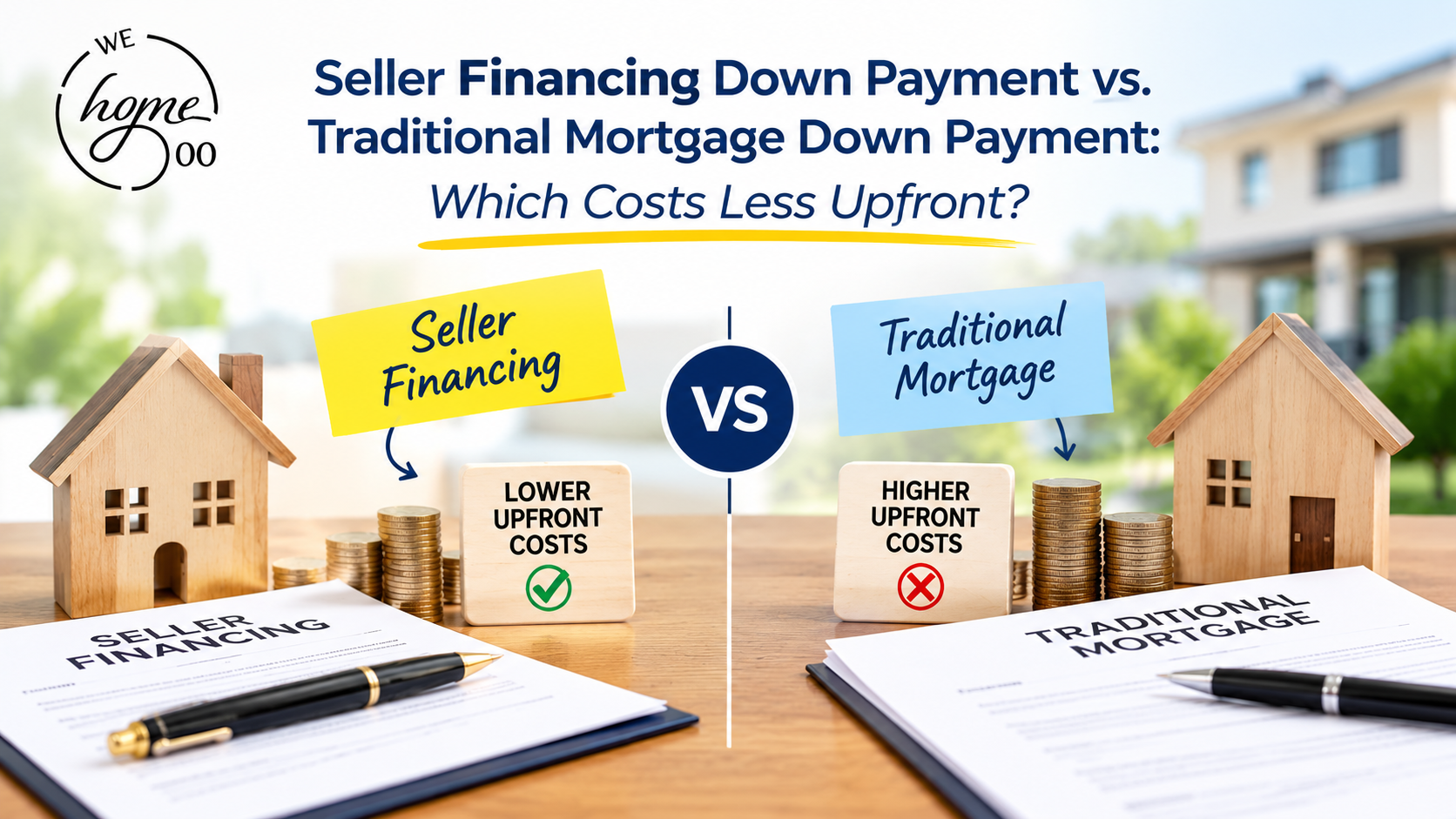
In tight credit markets or high-rate environments, seller financing allows buyers to negotiate directly with the property owner. Instead of securing a bank loan, the seller acts as the lender, executing a promissory note secured by the property.
Flexible transaction arrangements such as those structured through innovative platforms like WeHome500 demonstrate how alternative financing can bypass traditional institutional friction, offering customized repayment terms that align directly with a buyer’s long-term payoff plan.
Phase 2: Building Equity and Accelerating the Payoff
Securing the keys is only the initial step. Transitioning to own a home outright requires active equity management through practical strategies.
The Power of Biweekly Payment Schedules
Switching from monthly payments to a biweekly schedule results in making 26 half-payments per year. This equals 13 full monthly payments annually instead of 12. On a standard 30-year mortgage, this simple adjustment can shave 4 to 6 years off the repayment period without drastically affecting daily cash flow.
Recasting vs. Refinancing
When interest rates drop, traditional refinancing can lower monthly payments, but it often resets the 30-year clock. Mortgage recasting offers an effective alternative. By making a lump-sum principal payment (usually $10,000 or more), the lender recalculates your monthly payment based on the lower balance while keeping your original loan term and interest rate intact.
Applying Supplemental Principal Payments
Even modest monthly additions directly toward the loan principal alter the amortization curve. Because interest calculates against the remaining principal balance each month, early principal reductions eliminate compound interest fees down the road.
Phase 3: Mitigating Risks on the Road to Debt-Free Ownership
Accelerating a mortgage payoff should never compromise overall financial health. Maintaining a balance between debt reduction and liquidity is essential.
Maintaining Emergency Reserves
Directing every extra dollar toward a mortgage traps equity in an illiquid asset. Financial advisors consistently recommend maintaining three to six months of liquid living expenses in a high-yield account before making aggressive principal prepayments.
Opportunity Cost Analysis
If your mortgage interest rate is low, aggressive prepayment might yield lower long-term returns than investing excess funds in diversified market index funds. Weighing guaranteed debt relief against potential investment returns helps maintain a balanced wealth strategy.
Practical Action Items for Buyers and Homeowners
- Audit Your Amortization Schedule: Review your statement to see exactly how much of your current payment goes toward principal versus interest.
- Automate Extra Principal Contributions: Set up automatic monthly transfers even $50 or $100 extra tagged specifically for principal reduction.
- Eliminate Private Mortgage Insurance (PMI): Monitor your loan-to-value (LTV) ratio. Once home equity reaches 20%, request the cancellation of conventional PMI to redirect those funds toward principal.
By pairing a deliberate acquisition strategy with disciplined principal reduction, buyers can shorten the timeline to debt-free property ownership and protect their long-term wealth.
Frequently Asked Questions (FAQs)
Q1 What is the best way to buy a house with a low down payment?
Government-backed programs like FHA loans (3.5% down) or VA and USDA loans (0% down) offer lower upfront costs. Alternatively, negotiating seller financing can help customize down payment terms directly with the owner.
Q2 How quickly can you pay off a 30-year mortgage using biweekly payments?
Making biweekly payments results in one extra full mortgage payment per year. Depending on the interest rate, this simple change can trim 4 to 6 years off a standard 30-year term.
Q3 Is it better to pay off a mortgage early or invest the extra cash?
It depends on your loan’s interest rate and personal risk tolerance. Paying off debt provides a guaranteed, risk-free return equal to your interest rate, while investing offers higher potential long-term returns alongside market volatility.
Q4 Can you own a home outright without paying off the full loan term?
Yes. You can own your home outright ahead of schedule by making extra principal payments, making lump-sum recasts, or using a shorter loan term like a 15-year fixed mortgage.
Q5 What fees are associated with early mortgage payoff?
Most modern residential mortgages do not carry prepayment penalties, but it is important to review your loan disclosures or contact your lender to verify that no early payoff fees apply to your note.